

Depending on which English translation of the Bible you read, there are two possible things that will cover a multitude of sins: charity or love.
“Charity covers a multitude of sins” and “Love covers a multitude of sins” are both familiar sayings, and both are based on the same line in the Bible: 1 Peter 4:8.
The reason for the two versions can be traced back to the Protestant Reformation—the historic religious schism that occurred when Protestantism broke away from the Roman Catholic Church in the 1500s.
In the King James Version of the Bible (KJV), Saint Peter is quoted as writing: “And above all things have fervent charity among yourselves: for charity shall cover the multitude of sins.”
The Epistles of Saint Peter and other books of the New Testament were originally written in Koine Greek (also called Common Greek). That was the everyday language of trade and literature across the Mediterranean world during the first century A.D.
Peter used the Greek word agape (ἀγάπη) for the virtue that covers a multitude of sins. His religious use of agape referred to a profound concept that can’t easily be translated into a single English word.
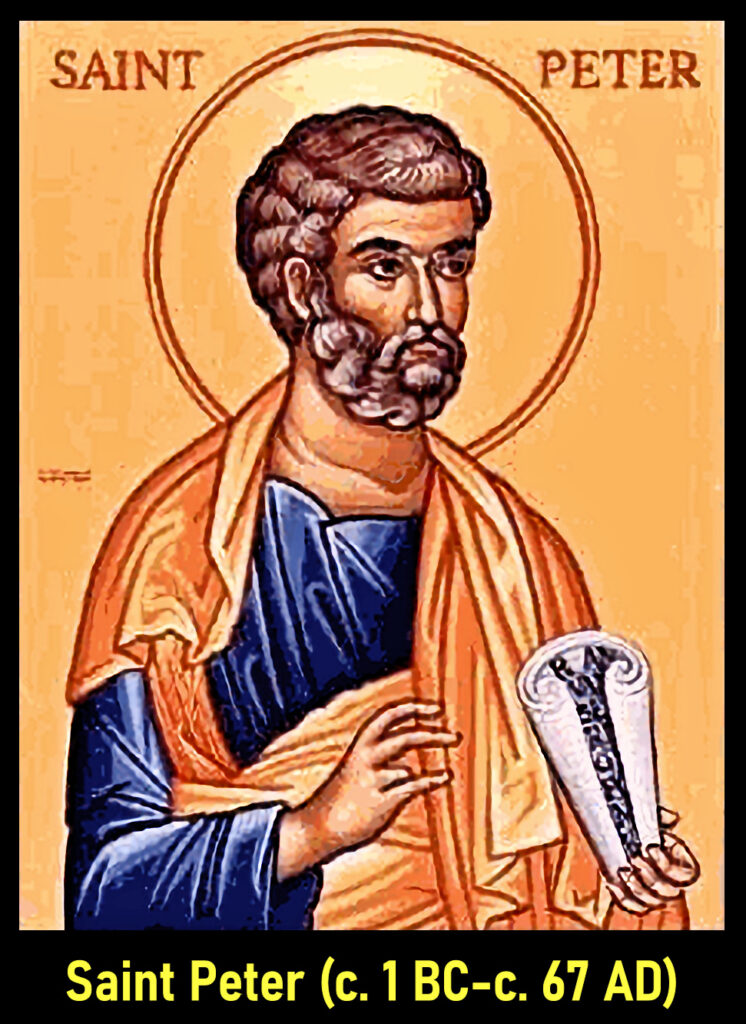
In that context, it was used to mean charitable compassion, empathy and non-romantic love toward other people. It’s the kind of love God and Jesus Christ are said to have for mankind—a higher love that can look past and forgive, and thus “cover” and accept, other people’s faults and transgressions.
In the late 4th century, St. Jerome translated the New Testament into Latin for what became the Catholic Church’s official Bible, the Vulgate. Jerome rendered agape as caritas (“charity”).
Protestantism arose in the 1500s, and the movement reached England when King Henry VIII broke with Rome in 1534—largely because Pope Clement VII had refused to annul his marriage to Catherine of Aragon.
Amid this upheaval, a number of English Bible translations emerged. William Tyndale’s groundbreaking 1526 New Testament—along with subsequent authorized versions like the Coverdale Bible and the Great Bible—rendered agape as “love” rather than the Latin Vulgate’s “charity.”
That wasn’t just a stylistic choice; it was part of a theological revolution. Protestants championed sola fide—the doctrine that faith alone, not good works, brings salvation.
Replacing “charity” with “love” reflected their desire to distance the text from the late-medieval Catholic practice of treating religious donations to the Church as “good works” that helped earn salvation and forgiveness—and thus a place in heaven.
This distinction extended to other famous passages as well. The phrase “God is love” in 1 John 4:8 appears in the Latin Vulgate as “Deus caritas est” (“God is charity”).
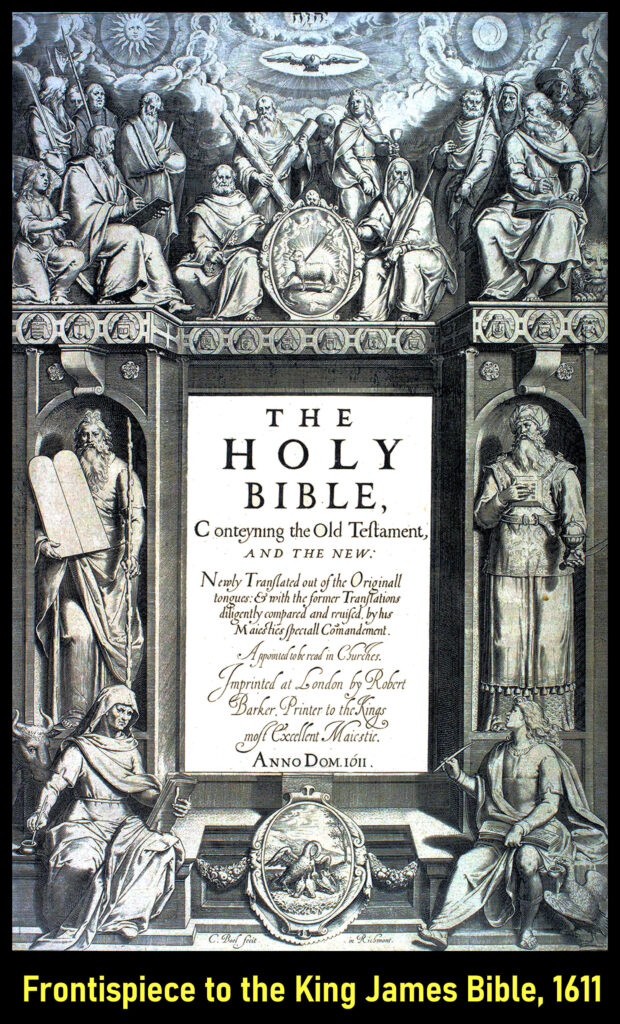
The translators of the King James Version—traditionally cited as being published on May 2, 1611—split the difference. King James I (aka King James VI) commissioned the translation to create a unified Bible that would prevent a religious civil war between High Church Anglican Bishops and the more radical Puritans.
The High Church Anglican Bishops wanted to preserve traditional church hierarchy, liturgical beauty, and their ecclesiastical authority.
The Puritans wanted to strip away all remaining Catholic influences from the Church of England—including vestments, bishops, ornate altars, and traditional church vocabulary.
The translation committee compromised.
They used “love” in most places (such as John 3:16) but retained the traditional Catholic rendering of “charity” in more than 25 passages—including 1 Peter 4:8.
For the next three centuries, “charity covers a multitude of sins” became the dominant proverb in the English-speaking world. Meanwhile, the English word “charity” itself drifted in meaning, becoming synonymous with financial donations to nonprofit organizations.
That semantic shift bothered Pope Pius XII. In 1943, he authorized Catholic scholars to translate new editions of the Bible directly from the original Greek and Hebrew, rather than relying primarily on Jerome’s Latin Vulgate.
As a result, both modern Protestant Bibles and the Vatican-approved New American Bible Revised Edition use “love” for 1 Peter 4:8—getting closer, many Biblical scholars believe to what agape originally meant.

Over the centuries, the “multitude” line has launched many variations.
One of my favorites was written by the Irish playwright, poet, social critic and wit Oscar Wilde (1854-1900). In his essay “The Soul of Man Under Socialism” (1891), he gave it a sardonic twist that was humorous on the surface, but subtly serious.
“Charity creates a multitude of sins,” Wilde wrote, suggesting that charity was a way of papering over the injustices of poverty rather than addressing their root causes.
A funnier riff on the phrase is in the Star Trek episode “Patterns of Force” (Season 2, Ep. 21, first aired in 1968).
In that episode, Captain Kirk and Spock conduct an investigation on the planet Ekos, where the ruling government is modeled on Adolf Hitler’s Third Reich. To try to avoid attracting attention, they dress in Nazi uniforms.
At one point, Kirk looks at Spock, who is wearing a Nazi helmet, and quips: “That helmet covers a multitude of sins.” If you know what Spock looks like without the helmet, you’ll know what Kirk meant and why it’s funny. If you don’t, what planet have you been living on?
Comments? Corrections? Questions? Post them on the Famous Quotations Facebook page
or email me at the address shown on the “About” page for this blog. © Subtropic Productions 2026
* * * * * * * * * *