From the 1920s through the 1950s, boxing was one of America’s most popular sports.
Championship fights made front-page news. Millions listened to matches on the radio and heavyweight boxing champions were among America’s best known celebrities.
Joe Louis, nicknamed “The Brown Bomber,” was one of the biggest.
He held the World Heavyweight Championship from 1937 to 1949, longer than any other heavyweight champion in boxing history.
Whenever Louis fought, it was major news, and his 1946 rematch with Billy Conn attracted even more attention than usual.
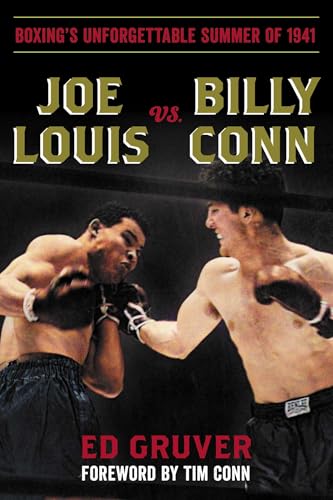
Five years earlier, on the night of June 18, 1941, Conn had come close to taking away Louis’ heavyweight title with a strategy based on speed and constant movement.
He darted in with quick combinations, then moved away before Louis could land one of his devastating punches. For twelve rounds, it worked brilliantly. Louis began to seem tired.
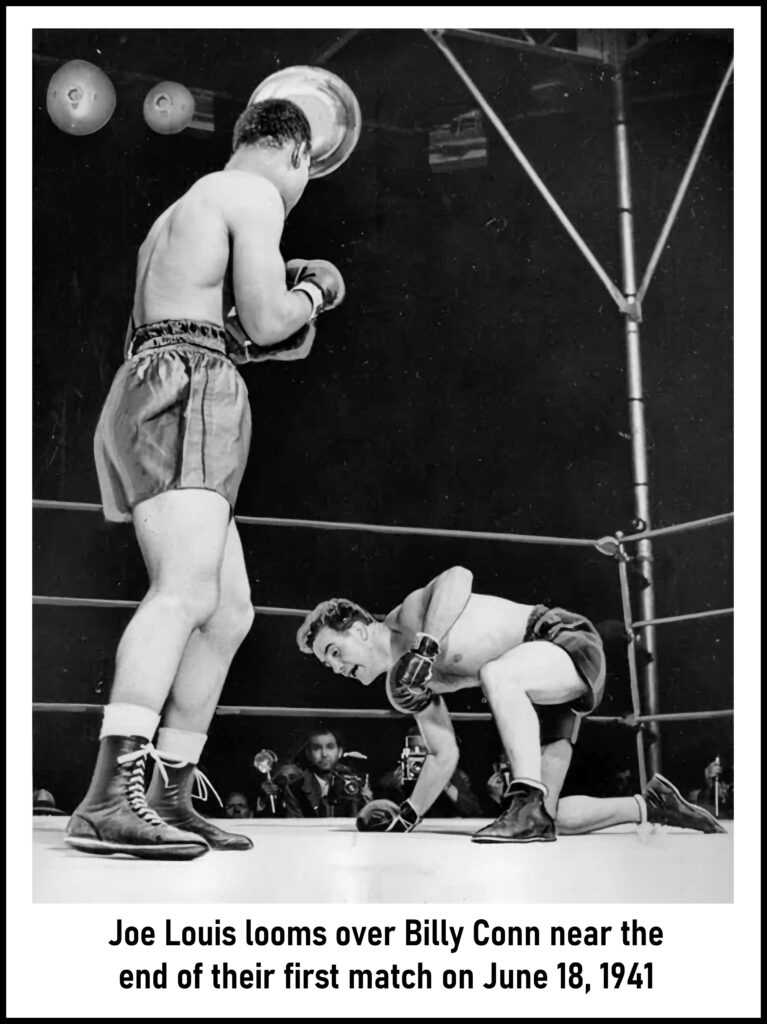
Then, in the thirteenth round, Conn made the mistake of standing and trading punches with the hardest hitter in the heavyweight division.
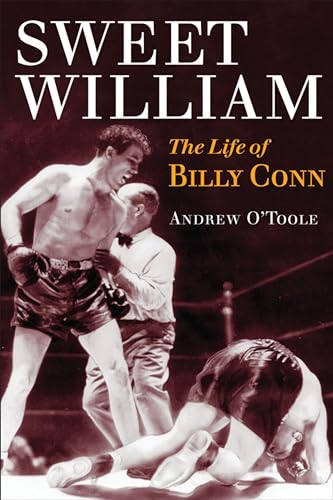
The Brown Bomber caught him with a crushing right hand. Conn went down and was counted out.
Afterward, Conn admitted what nearly everyone else was thinking: “I lost my head—and a million bucks.”
Both fighters wanted a rematch, but World War II delayed it for five years while both men served in the military.
When the rematch was finally scheduled for June 19, 1946, most boxing writers believed Conn’s only chance was to keep moving and make Louis chase him.
On June 8, 1946, a group of reporters gathered around Louis at his New Jersey training camp.
Among the newspaper stories published the next day was one by journalist Lewis Burton, a prominent sports columnist best known for his coverage of Joe Louis and heavyweight boxing.
Burton was also the “official media scorer” selected to keep the press’s round-by-round scorecard for Louis’s championship fights.
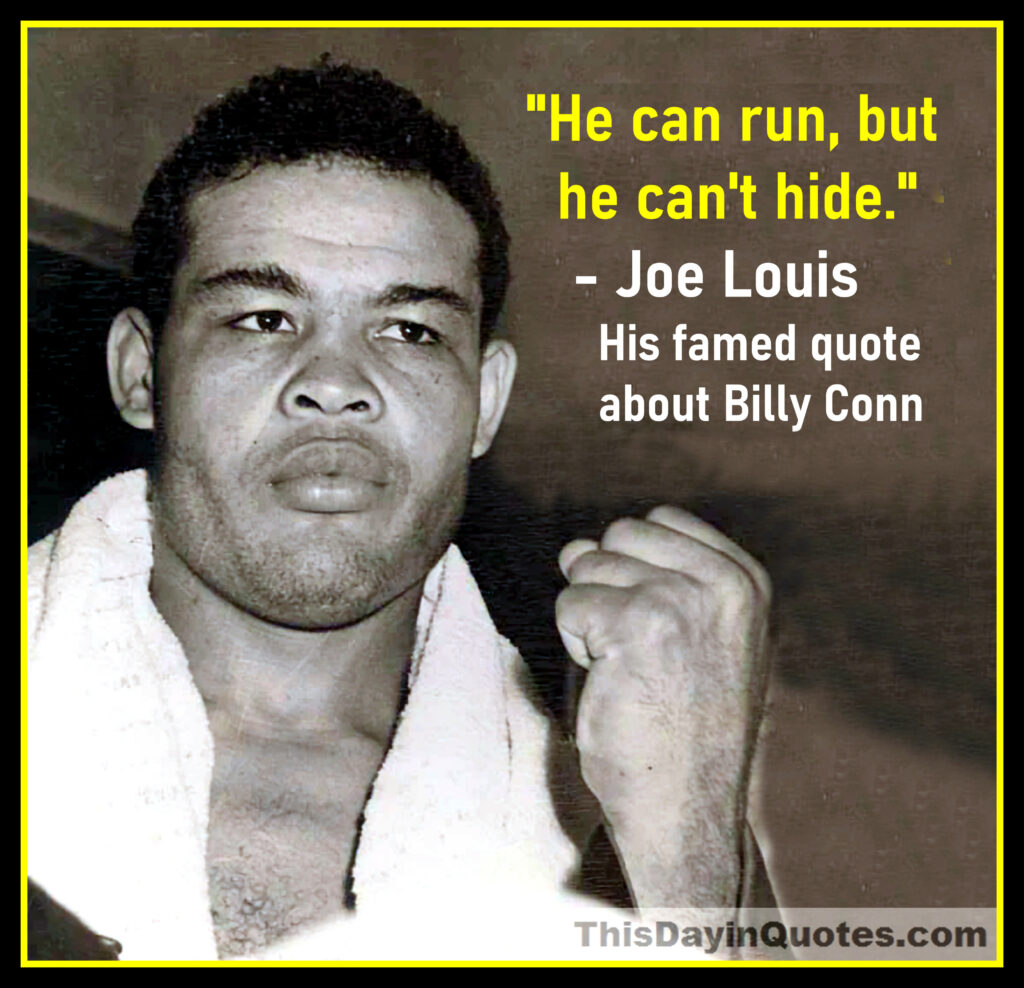
Burton’s June 9, 1946, column includes a series of questions he asked Louis, along with Joe’s answers. One question was: “If he runs, will you chase him?”
Louis answered:
“He can run, but he can’t hide.”
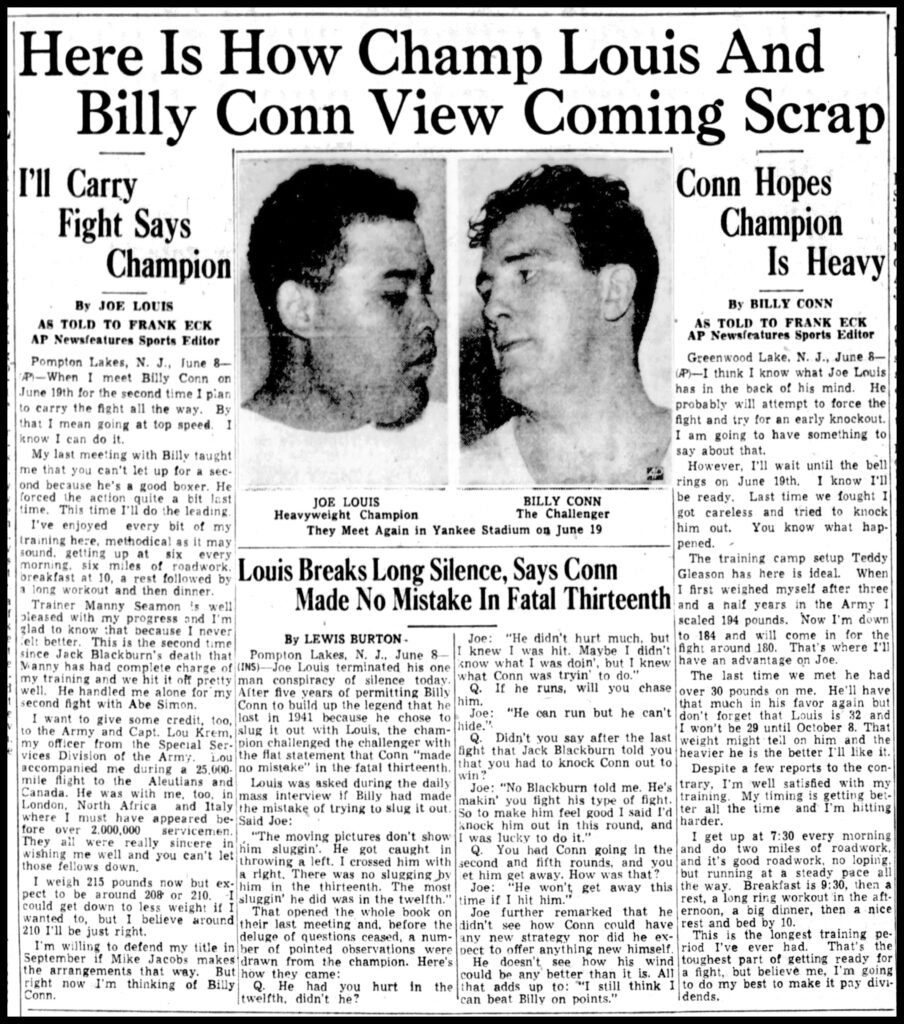
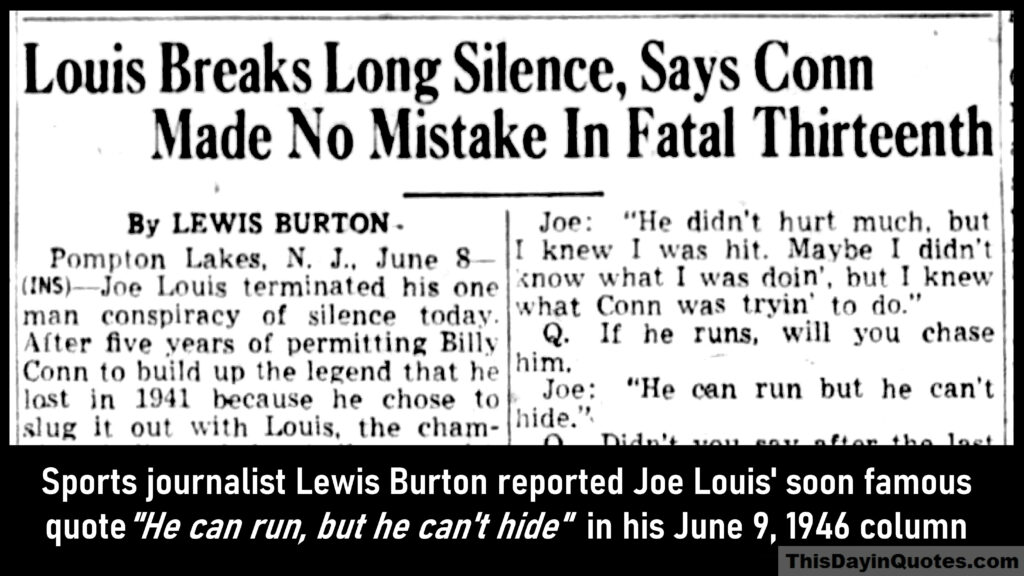
Those six words were repeated in news reports nationwide in the days leading up to the rematch, and soon became one of the most iconic quotations in sports history.
The June 19 rematch was at Yankee Stadium. It was attended by 45,000 spectators and heard by millions of people on the radio.
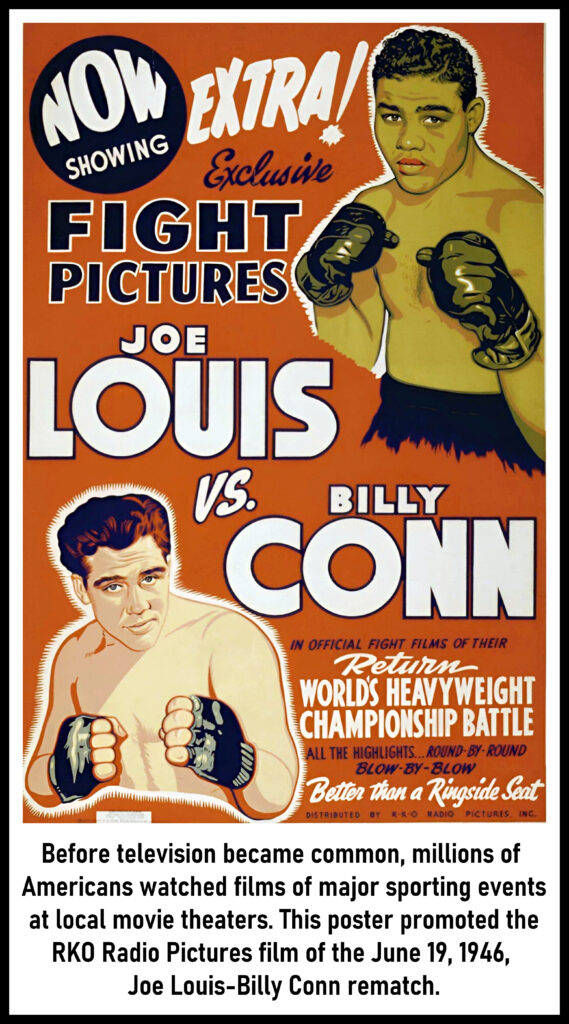
It was also the first heavyweight championship bout televised over a national television network, though that audience at the time was only in the tens of thousands.
But millions saw the official RKO Pictures film of the fight that was soon playing at local movie theaters.
Conn spent much of the fight circling and retreating, as he did in 1941. Then, in the eighth round, Louis trapped him against the ropes and unleashed a devastating combination of punches.
Conn went down and was counted out.
The next morning The New York Times declared: “Louis Proves His Own Prediction: Conn Could Run, but Couldn’t Hide.”
There’s some confusion about the first use of Louis’s “run/hide” word combo. Many books of quotations incorrectly use the date of the rematch as the date for the quote.
In addition, Louis had used a version of it before 1946.
Quotation scholar Barry Popik noted on his “Big Apple” website that Joe used a very similar line in 1939.
Speaking to reporters about his upcoming match with Bob Pastor, who was known for moving quickly around the ring, Louis said: “It’s all right to have good legs, but remember one thing—when you’re in the ring you can run, but you can’t hide.”
Popik added: “While Joe Louis was referring to the boxing ring, his saying has long been in general use for any person to challenge an enemy.”
Nonetheless, although he may not deserve credit for coining the “run-hide” cliché, it was Joe Louis who made “He can run, but he can’t hide” a famous quotation.
Comments? Corrections? Questions? Post them on the Famous Quotations Facebook page
or email me at the address shown on the “About” page for this blog. © Subtropic Productions 2026
* * * * * * * * * *


RECOMMENDED READING & VIEWING RELATED TO THIS POST (plus a t-shirt for Mom)…