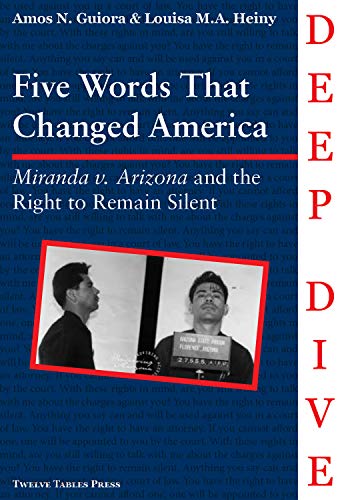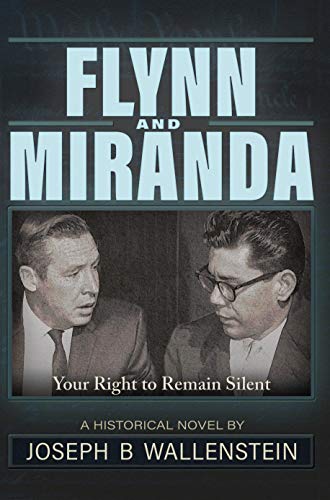
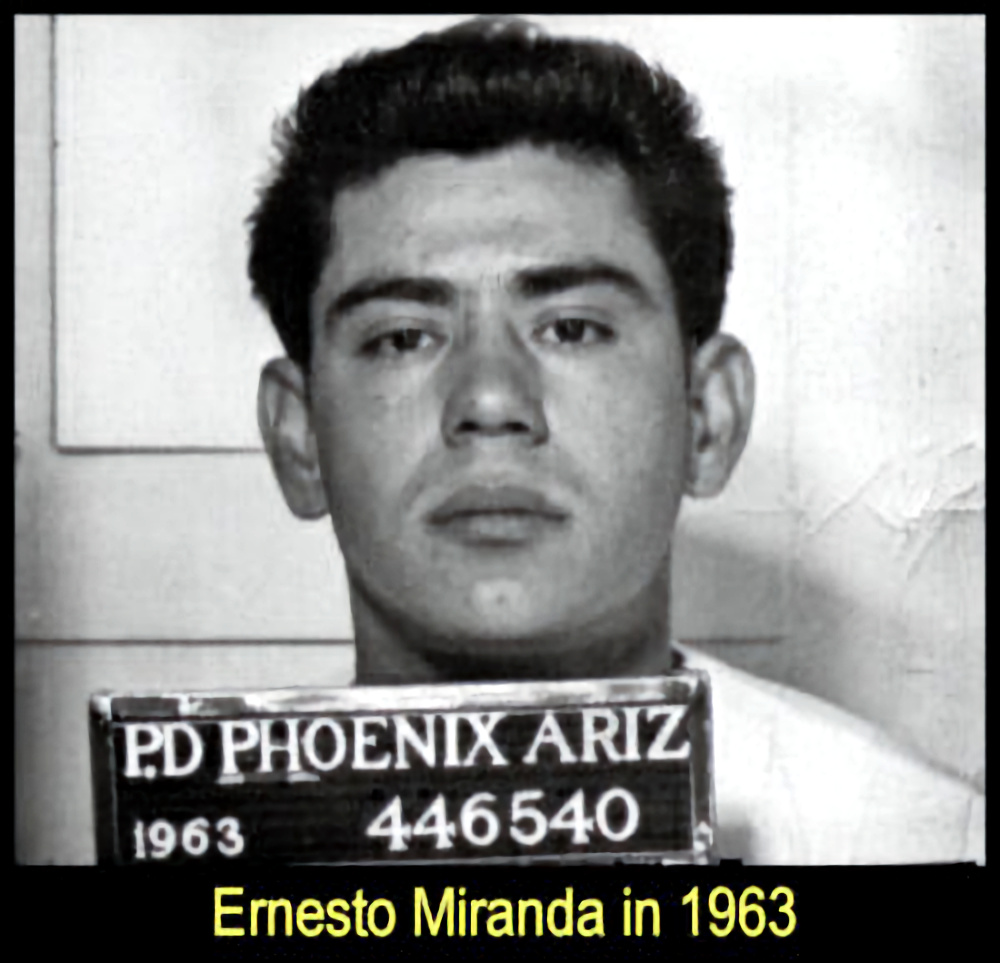
Even if you’ve never been arrested, you almost certainly know the first line of the warning police officers are supposed to recite when they arrest someone.
It’s been spoken in thousands of movies, TV shows, and novels and became a quip friends use when joking around:
“You have the right to remain silent.”
Yet most people know little or nothing about the origin of the phrase—or about the troubled young man whose name became permanently attached to it.
The warning was embedded into our culture on June 13, 1966, when the U.S. Supreme Court handed down its landmark decision in Miranda v. Arizona.
The case involved a 22-year-old Phoenix laborer named Ernesto Arturo Miranda.
Miranda was no choirboy. By his early twenties, he’d already accumulated a lengthy arrest record that included burglary, car theft, armed robbery, and other offenses. He spent time in reform school as a teenager and served jail sentences in California, Texas, Ohio, and Arizona.
On March 2, 1963, an 18-year-old Phoenix woman reported that she had been abducted, driven into the Arizona desert, and raped by a man she didn’t know. Police focused on Miranda because the victim’s description of the perpetrator’s vehicle was similar to one he owned.
The woman didn’t pick Miranda in a lineup. Nevertheless, detectives held him for questioning. After several hours of intense interrogation, Miranda signed a written confession. He was soon convicted and sent to prison.
Since it was not yet customary for police to advise people they arrested about their right to remain silent under the Fifth Amendment of the U.S. Constitution—the constitutional protection people are invoking when they “take the Fifth”—Miranda had not been informed of that right. Nor did the police tell him he had the right to consult an attorney before answering their questions.
Miranda’s lawyers appealed his conviction and the American Civil Liberties Union decided to help. Their appeal centered on the Fifth Amendment, which states that no person “shall be compelled in any criminal case to be a witness against himself.”
The case eventually reached the U.S. Supreme Court. In a closely divided 5-4 decision written by Chief Justice Earl Warren, the Court ruled that suspects must be informed of certain constitutional rights before custodial interrogation begins.
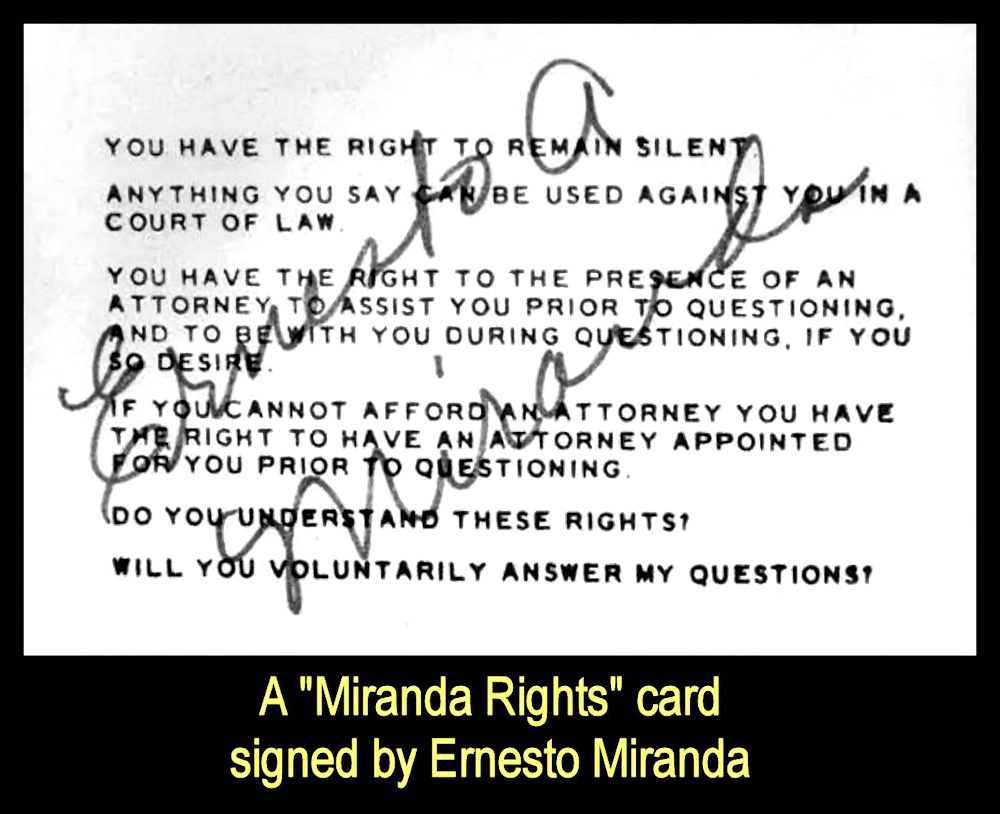
The Court’s decision stated:
“Prior to any questioning, the person must be warned that he has a right to remain silent, that any statement he does make may be used as evidence against him, and that he has a right to the presence of an attorney, either retained or appointed.”
Those words became the basis for what soon became known as the “Miranda Rights” (aka “Miranda Warning”).
The exact wording varies from state to state, but the familiar version most Americans know is something like this:
“You have the right to remain silent. Anything you say can and will be used against you in a court of law. You have the right to an attorney. If you cannot afford an attorney, one will be provided for you.”
The Supreme Court’s ruling transformed police procedure throughout the United States. Supporters hailed it as an important safeguard against coercive interrogations and wrongful convictions. Critics argued that it made law enforcement’s job more difficult.
Ironically, the decision did not free Ernesto Miranda.
His original conviction was overturned, but Arizona prosecutors retried him. During the second trial, his confession was excluded. However, other evidence remained. Most notably, Miranda’s estranged common-law wife testified that he had essentially admitted committing the crime to her.
In 1967, Miranda was convicted again and sent back to prison.
After serving several more years, he was paroled in 1972. He never escaped the notoriety associated with his name. In fact, he became a minor celebrity.
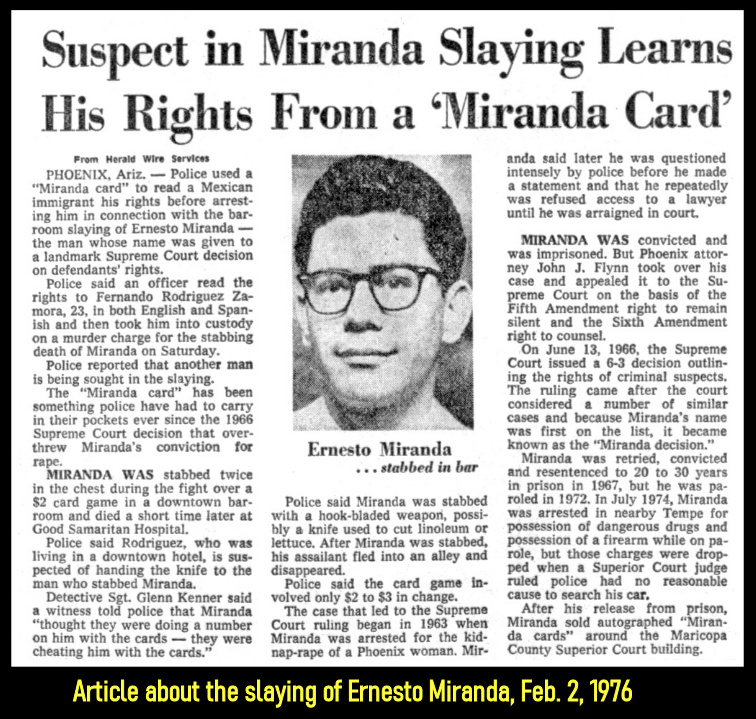
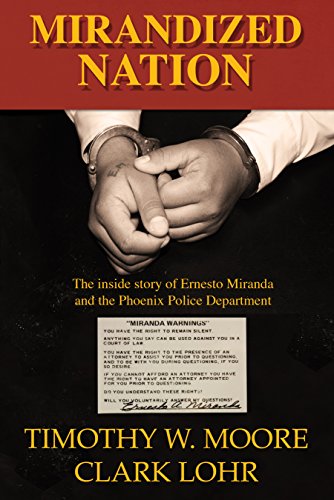
One of the odd ways he earned spending money was by autographing cards printed with the Miranda warning and selling them to collectors, tourists, and curiosity seekers.
Then came one final twist worthy of a crime novel.
In January 1976, Miranda was stabbed to death in the men’s room of a bar in Phoenix after a dispute over a poker game.
Police suspected a 23-year-old Mexican national who’d been present at the bar of being involved in the slaying. They arrested him and read him his Miranda rights.
He decided to remain silent.
There was not sufficient evidence to charge him. As a result, he was released and soon headed back to Mexico.
News stories noted the irony.
The man suspected of killing Ernesto Miranda benefited from the precedent established by his Supreme Court case.
Among the things found in Miranda’s pockets after his death were several autographed Miranda Rights cards.
* * * * * * * * * *
Comments? Corrections? Questions? Post them on the Famous Quotations Facebook page
or email me at the address shown on the “About” page for this blog.
RELATED READING AND VIEWING…