

“We don’t need no stinking badges!” is one of the few famous lines that is both a famous quote and a misquote.
It’s also the source of many variations about stinkin’ things we don’t need.
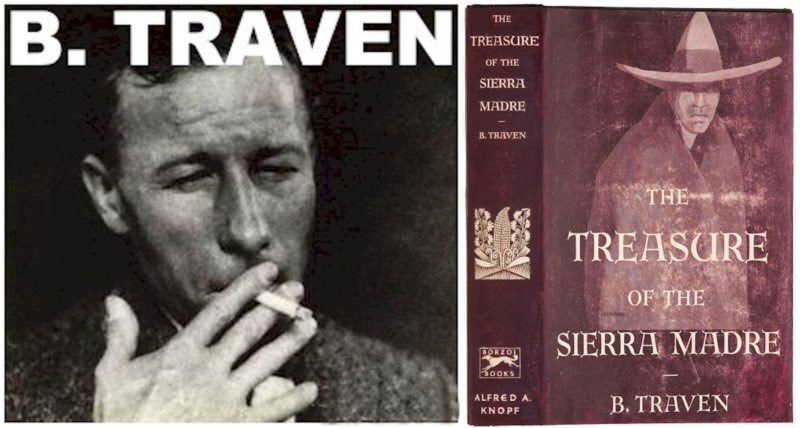
The evolution of this line began in 1927 with the publication of the novel The Treasure of the Sierra Madre, a tale of greed, betrayal and madness written by the mysterious author and leftist/anarchist B. Traven (c. 1890-1969).
The main characters are three American prospectors searching for gold in Mexico’s Sierra Madre mountains: Fred C. Dobbs, Bob Curtin and an old-timer named Howard.
In a scene later made famous by the movie version, the prospectors run into a group of shady-looking, heavily-armed Mexicans, who they suspect are bandits.
Indeed, the Mexicans are bandits and the meeting ends up in a gunfight. But just before the shooting starts, the leader of the bandits tells the prospectors that they are federales — the local “mounted police.”
Dobbs says skeptically of that claim: “If you are the police, where are your badges?”
In Traven’s book, the bandit leader replies angrily (and colorfully):
“Badges, to god-damned hell with badges! We have no badges. In fact, we don’t need badges. I don’t have to show you any stinking badges, you god-damned cabron and ching’ tu madre!”
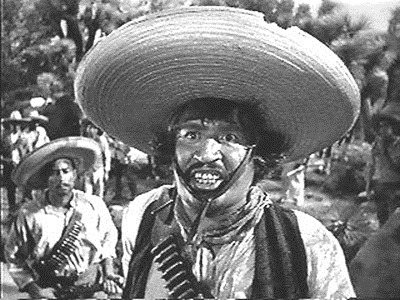
The answer given by the head bandido in the 1948 movie adaptation of The Treasure of the Sierra Madre is a bit different than that.
Most notably, it leaves out the English and Spanish profanities. (You can look up the meaning of cabron and ching’ tu madre on this web page.)
The famed film was released in the U.S. on January 7, 1948. Some sources say January 6th, but I believe that is either a local premiere date or simply wrong.
In the movie, Fred Dobbs is played by Humphrey Bogart and he asks the same question as in the book: “If you are the police, where are your badges?”
The bandit leader, called “Gold Hat” in the script and played by actor Alfonso Bedoya, responds sneeringly:
“Badges? We ain’t got no badges! We don’t need no badges!
I don’t have to show you any stinking badges!”
The Treasure of the Sierra Madre became one of the most highly-praised and popular movies ever made. So, it’s no surprise that Bedoya’s famous “no badges” lines spawned some humorous parodies.
What is unusual is that one of the parody versions became far better known than the lines in the original film.
In fact, many people mistakenly think it comes from the 1948 movie.

That renowned version is, of course:
“Badges? We don’t need no stinking badges!”
If you’re a Mel Brooks fan, you know those lines are in his hilarious movie, Blazing Saddles, which was released on February 7, 1974.
What you may not know is that the same lines were first spoken by Micky Dolenz in 1967, in the TV comedy show The Monkees.
Mickey says it in the episode titled “It’s A Nice Place To Visit” (the first episode of Season 2), which originally aired on September 11, 1967.
In that episode, Mickey and two of his Monkees bandmates, Peter Tork and Michael Nesmith, dress up as Mexican bandits to rescue their singer Davy Jones from a “real” Mexican bandit who has taken him prisoner.
Before they leave to save Davy, Nesmith says: “Wait a minute, don’t you think maybe we oughtta take something out with us, like a club card or some badges?”

Dolenz replies with a heavy Mexican accent (about 9 minutes in): “Badges? We don’t need no stinking badges!”
I don’t know if Mel Brooks was a Monkees fan, but seven years later he made those words immortal by putting them in the script for Blazing Saddles.
In a now famous scene in that movie, the corrupt State Attorney General Hedley Lamarr, played by Harvey Korman, has a sheriff’s badge given to one of his Mexican bandit henchmen, played by Rick Garcia.
Korman says to Garcia: “Be ready to attack Rock Ridge at noon tomorrow. Here’s your badge.”
Garcia contemptuously throws the badge on the ground and replies with a thick Spanish accent: “Badges? We don’t need no stinking badges!”
Few people know those same words had been previously used in a Monkees episode.
But because of the huge popularity of Blazing Saddles, they became a famous movie quotation and sparked countless satirical variations based on the linguistic formula “We don’t need no stinking [fill in the blank].”
I’ve posted some of my favorite variations in a post on my Quote/Counterquote blog.
You can also click this link to see some recent examples from news stories and blogs — unless, of course, you don’t need no stinking examples.
* * * * * * * * * *
Comments? Corrections? Questions? Email me or post them on my Famous Quotations Facebook page.
Related reading and viewing…


